Tracing Roulette Player Journeys Through Adaptive Loyalty Tiers in Emerging Digital Markets
Cameron Hayes · Jul 22, 2026

Tracing Roulette Player Journeys Through Adaptive Loyalty Tiers in Emerging Digital Markets
Digital platforms in emerging markets have expanded roulette offerings rapidly since 2024, and loyalty systems now track individual player movement through multiple tiers that adjust in real time. These adaptive structures record entry points, spin frequency, wager sizes, and session durations to determine tier placement without fixed calendars. Operators in regions such as Southeast Asia and Latin America apply algorithms that recalibrate benefits after every few hundred spins, creating distinct pathways for casual participants and high-volume players alike. Player entry typically begins at a base tier that grants standard table access and basic cashback percentages. Movement to the next level occurs once cumulative data meets thresholds for consecutive active days and average bet amounts. Observers note that systems log these metrics across both desktop and mobile sessions, allowing seamless continuation when users switch devices mid-journey. In markets like Brazil and Indonesia, where mobile penetration exceeds 80 percent, the majority of tracked roulette activity occurs on smartphones, according to aggregated platform reports released in early 2026.Adaptive Tier Mechanics and Data Inputs
Adaptive tiers rely on live data streams rather than static monthly reviews. A player who increases wager volume over a seven-day window may receive an automatic upgrade notification within hours. Conversely, extended inactivity triggers a temporary downgrade that resets benefit access until new activity resumes. Research from academic groups studying digital gambling patterns indicates that such fluid adjustments correlate with higher retention rates in competitive markets where multiple operators vie for the same user base.
Key inputs include total roulette spins completed, average stake per spin, and participation in time-limited table events. Systems also factor in cross-game activity when roulette players explore other titles, yet the primary pathway remains anchored to roulette-specific metrics. July 2026 platform updates in several Asian markets introduced additional variables such as peak-hour participation, further refining how quickly users advance.
Mapping Individual Journeys Across Regions
Case examples drawn from anonymized platform datasets reveal common sequences. One documented path starts with low-stake European roulette sessions on mobile, progresses through mid-tier access to live dealer tables after 150 tracked spins, and reaches premium status once monthly volume surpasses defined benchmarks. Another trajectory shows users entering via tournament qualifiers, skipping early tiers when initial deposits align with promotional criteria, then settling into sustained mid-level play.
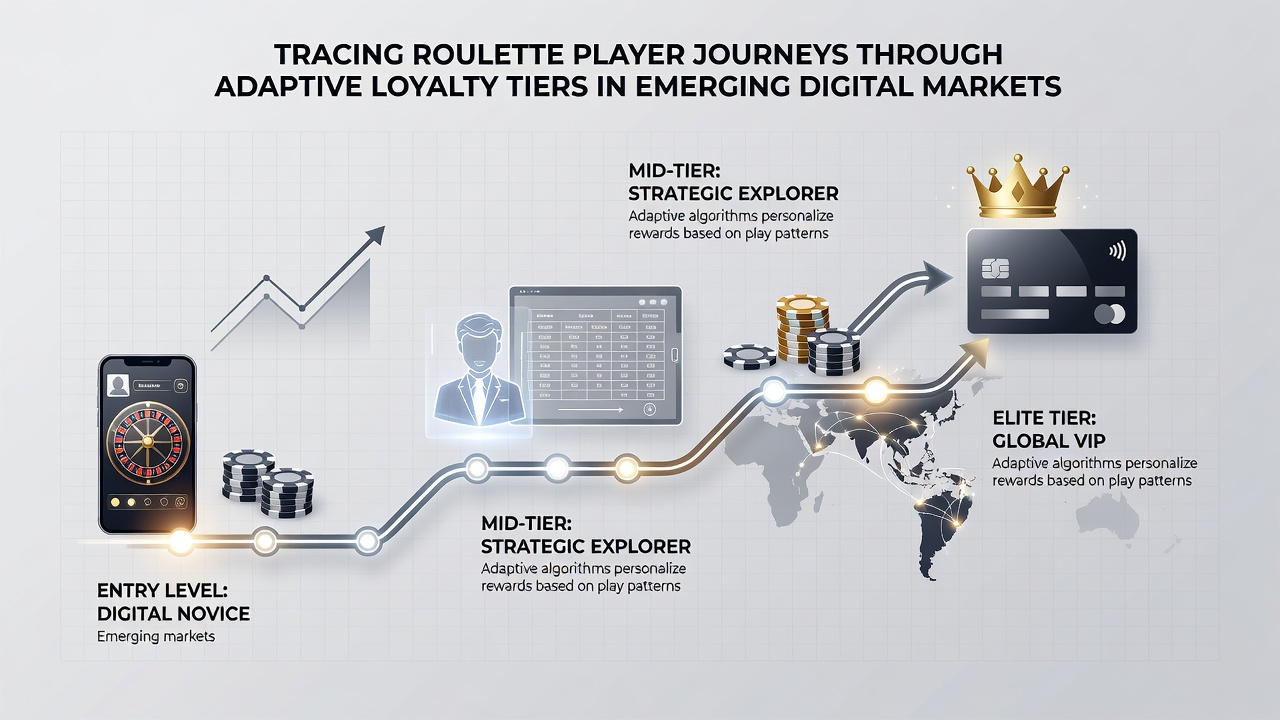
Regional differences appear in journey length and speed. Platforms serving Indian users often record faster tier climbs due to higher average session counts, while Latin American markets show longer dwell times at each level before upgrades. Data compiled by the Asia Pacific Gambling Studies Network highlights these variations without attributing causation to any single factor.
Integration with Broader Platform Ecosystems
Loyalty tracking extends beyond isolated roulette play into interconnected features such as leaderboard positioning and seasonal challenges. When players reach higher tiers, additional data layers activate, including personalized table recommendations and priority access during peak server loads. These connections create extended pathways that link daily roulette activity to longer-term platform engagement across multiple product verticals.
External verification of these systems appears in reports issued by the Malta Gaming Authority and the Australian Institute of Gambling Research, both of which examined tier adaptability in regulated emerging-market operators during 2025. Their findings confirm that real-time recalibration occurs within defined compliance parameters while maintaining audit trails for every tier transition.
Conclusion
Tracing roulette player journeys through adaptive loyalty tiers reveals structured yet flexible routes shaped by continuous data collection. Emerging digital markets continue to refine these mechanisms, producing measurable progression patterns that differ by region and device preference. The resulting frameworks supply operators with granular visibility into how individual roulette participants move from entry-level engagement toward sustained platform involvement.