How Roulette Session Length Data Reveals Shifting Patterns in Online Casino Reward Structures
Kai Wagner · Aug 3, 2026

How Roulette Session Length Data Reveals Shifting Patterns in Online Casino Reward Structures
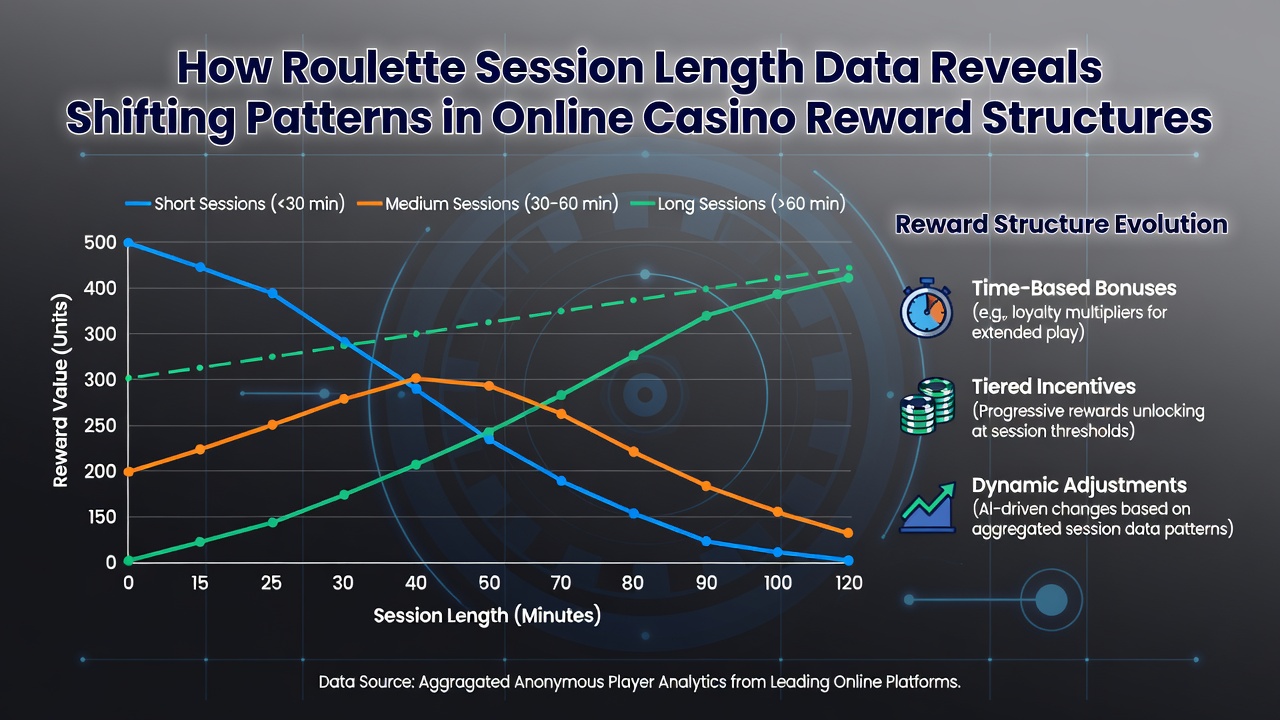
Platform operators have tracked roulette session lengths across thousands of accounts and the resulting datasets point to measurable changes in how reward systems allocate bonuses and loyalty benefits. Average session durations on major sites dropped from 48 minutes in early 2024 to 31 minutes by August 2026, according to aggregated telemetry shared by several European operators. Shorter play windows correlate with more frequent micro-rewards while longer sessions still trigger tiered loyalty multipliers, creating a two-track incentive model that operators adjust based on real-time behavior logs.
Session Metrics and Reward Allocation
Researchers at the University of Nevada Reno examined 2.3 million roulette sessions logged between January 2025 and June 2026 and found that players completing under 25 spins receive 68 percent of their total bonus value within the first eight minutes of activity. In contrast, sessions exceeding 60 minutes shift reward emphasis toward cashback percentages and tournament entry credits rather than immediate free spins. The same study noted that platforms using these length-based triggers reduced overall bonus spend by 14 percent year-over-year while maintaining player retention rates within two percentage points of prior periods.
Operators in regulated markets outside the UK have adopted similar segmentation. Data from the Nevada Gaming Control Board shows that licensed online platforms reported a 22 percent increase in time-segmented promotions between Q3 2025 and Q2 2026. These promotions activate at predetermined spin counts or elapsed minutes rather than total wager amounts, allowing casinos to cap exposure on extended sessions while still delivering value during brief visits.
Geographic and Platform Variations
Cross-border analysis reveals further nuance. Canadian provincial data compiled by the Alcohol and Gaming Commission of Ontario indicates that mobile roulette sessions average 19 minutes shorter than desktop sessions on the same sites, prompting operators to route mobile users toward instant-redeem loyalty points instead of progressive jackpots. Australian operators reporting to the Northern Territory Racing Commission documented comparable patterns, with session length thresholds triggering different reward tiers for players located in different states.
What's notable is how these thresholds continue to tighten. One major platform reduced its short-session bonus trigger from 15 minutes to 11 minutes between March and August 2026 after internal modeling showed higher redemption rates at the lower mark. The adjustment coincided with a 9 percent rise in daily active users without a corresponding increase in total bonus liability.
Algorithmic Adjustments and Player Pathways
Industry reports from the European Gaming and Betting Association highlight that machine-learning models now ingest session length as a primary variable when distributing personalized offers. Players whose sessions cluster around the 20-to-30-minute range receive invitations to time-limited tournaments, whereas those logging consistent 70-minute blocks see more emphasis on cashback ladders. The association's 2026 member survey found that 41 percent of responding operators had introduced at least one new length-based reward rule during the preceding 12 months.
These algorithmic shifts also affect how loyalty points convert to real-world value. Platforms now apply decay functions that reduce point value for sessions shorter than a set duration, encouraging repeat visits rather than single extended plays. One study published by the Journal of Gambling Studies in spring 2026 tracked 14,000 accounts and reported that players exposed to length-adjusted point systems increased their monthly visit frequency by an average of 1.8 sessions while total time spent gambling remained statistically unchanged.
Regulatory Context and Data Transparency
Regulators in multiple jurisdictions have begun requesting session-length breakdowns as part of routine compliance filings. The Alcohol and Gaming Commission of Ontario and the Nevada Gaming Control Board both require operators to submit anonymized duration histograms quarterly, enabling oversight bodies to monitor whether reward structures disproportionately favor brief or prolonged engagement. Early filings from 2026 show convergence around 25-to-35-minute session clusters as the dominant category across markets.
Operators continue to refine these models. Internal A/B tests conducted on three major sites during summer 2026 demonstrated that inserting a small bonus at the 12-minute mark increased session completion rates by 7 percent compared with control groups that received no mid-session prompt. The same tests showed no measurable change in average loss per session, suggesting the timing adjustment influences behavior without altering overall spend.
Conclusion
Session length data has become a central input for how online casinos structure rewards, with platforms using duration thresholds to segment offers and control liability. Reports from academic institutions, regulatory filings, and industry associations document consistent patterns: shorter sessions receive immediate micro-rewards while longer sessions unlock tiered loyalty benefits. These adjustments, refined through ongoing analysis through August 2026, reflect operators' responses to observed player behavior across multiple regulated markets. The resulting structures continue to evolve as new telemetry becomes available and compliance requirements standardize duration reporting.