Algorithmic Customization of Roulette Welcome Offers Based on Behavioral Data from Past Tournaments
Klara Krüger · Aug 24, 2026

Algorithmic Customization of Roulette Welcome Offers Based on Behavioral Data from Past Tournaments
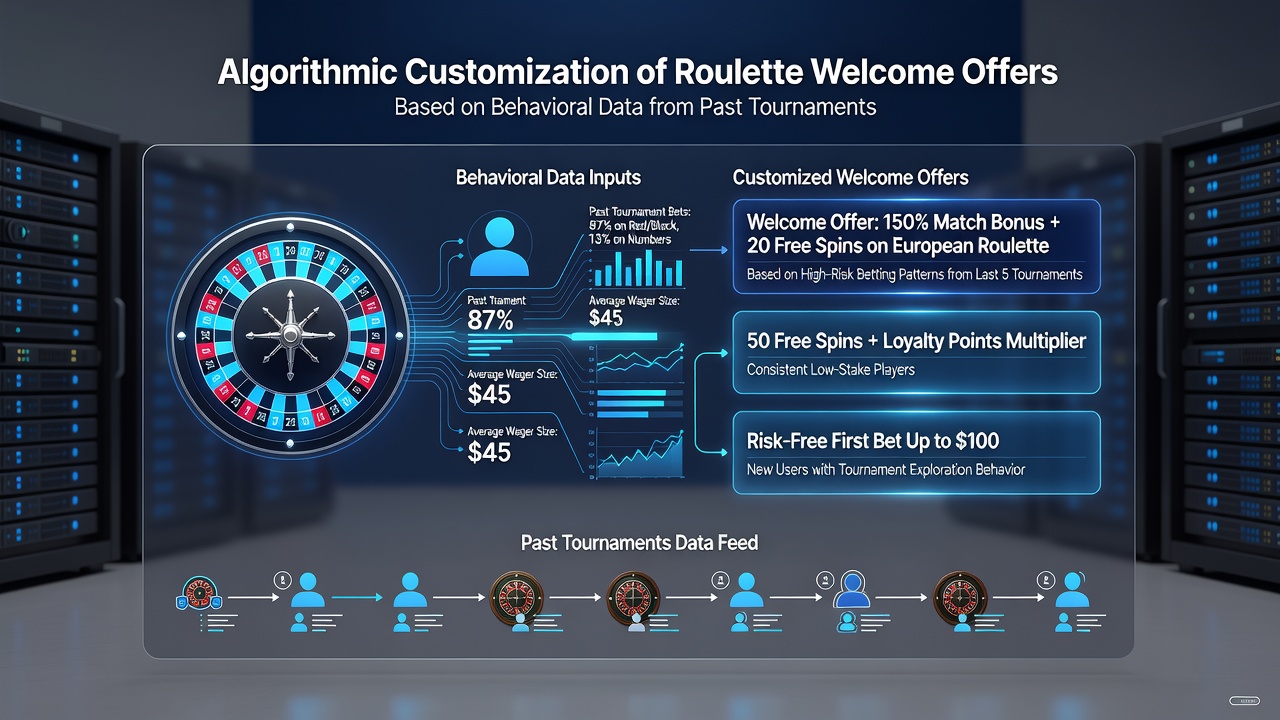
Platforms that host online roulette now integrate behavioral analytics from previous tournament participation to shape initial welcome offers for new users, and this process draws on patterns such as bet frequency, session duration, and risk tolerance observed during events. Data collected across multiple tournaments feeds into machine learning models that segment players into categories before any deposit occurs, while operators adjust parameters like match percentages or free spin allocations based on those segments. In August 2026 several major platforms updated their systems to pull from expanded tournament archives, which allowed finer distinctions between aggressive high-stakes participants and steady low-variance players.
Data Collection During Tournaments
Each tournament records metrics that include the number of spins placed, average stake size, and response to leaderboard position changes, and these records accumulate over months to create individual profiles that later inform welcome structures. Researchers at the University of Nevada's gaming analytics lab have documented how tournament logs capture deviations from baseline play, such as sudden increases in bet size after wins, and those deviations become weighted variables in the customization engine. Platforms store this information in secure databases that comply with regional data protection rules, while anonymized aggregates help refine the overall model without exposing personal details.
Algorithmic Matching Process
Once a new account registers, the system compares the limited early signals against historical tournament clusters, and it assigns an offer that aligns with the closest behavioral match rather than applying a uniform template. For instance, profiles that mirror past participants who favored European roulette variants with consistent small bets may receive extended free spin packages, whereas those resembling high-volatility tournament entrants often see larger deposit match caps tied to specific game types. The matching occurs within seconds of registration, and updates to the model occur monthly to incorporate fresh tournament outcomes. Observers note that this method reduces generic promotions that previously went unused, since the tailored elements reflect demonstrated preferences from earlier events.
Regional Regulatory Context
Operators must balance algorithmic precision with compliance requirements across jurisdictions, and in regions such as the European Union and parts of Canada the rules emphasize transparency around data usage for promotional targeting. A report from the Malta Gaming Authority outlines standards for disclosing how tournament-derived data influences bonus eligibility, and similar guidance appears in documents issued by the Nevada Gaming Control Board. These frameworks require clear player consent mechanisms at signup, while still permitting the use of aggregated behavioral insights to streamline offer delivery. Platforms that operate across borders maintain separate rule sets for each market, yet the core algorithmic logic remains consistent.
Implementation Examples Across Platforms
One European-facing site adjusted its welcome sequence in early 2026 after analyzing three years of tournament results, and it began routing players who had shown preference for live dealer events toward offers that included hybrid live and RNG spin bundles. Another operator in the Asia-Pacific region linked welcome free spin quantities directly to the average tournament completion rate observed in a player's behavioral cluster, which produced measurable differences in initial engagement rates according to internal performance summaries. These adjustments rely on continuous validation against new tournament cycles, and adjustments happen when statistical thresholds indicate a mismatch between predicted and actual uptake.
Technical Components Behind Customization
Decision trees and neural networks process the incoming data streams, while feature engineering extracts variables such as variance in bet sizing and correlation between session length and prize chasing. Engineers integrate these features with real-time registration data, and the resulting offer parameters update dynamically if additional tournament history becomes available later. Security protocols encrypt the underlying datasets, and access logs track every query made by the recommendation module to maintain audit trails required by licensing authorities.
Future Developments Expected by Late 2026
Industry briefings from the International Association of Gaming Regulators suggest continued investment in cross-tournament data lakes that will allow even more granular segmentation, and several platforms have signaled plans to incorporate wearable device signals from live tournament venues where permitted. These expansions aim to close gaps between online and on-site behavioral signals, yet they remain subject to ongoing legal review in each operating territory. The trajectory points toward tighter integration between historical event data and initial onboarding sequences across the sector.
Conclusion
Algorithmic customization grounded in past tournament behavior now forms a standard component of roulette welcome offer distribution on many platforms, and the practice continues to evolve with regulatory oversight and technical refinement. Data from events held through August 2026 and beyond will feed future iterations, while regional guidelines shape the boundaries of permissible personalization. The approach connects observed play patterns directly to promotional design without relying on uniform templates.